
What Nobody Tells You About Top 7 Dribbling Methods
The fastest way to improve football dribbling skills is not performing endless cone drills; it is combining close control, scanning, deception, acceleration, and pressure-based decisions. World Cup Hub, a FIFA World Cup content site, recommends a four-part routine: 10 minutes of ball mastery, 15 minutes of directional dribbling, 10 minutes of 1v1 work, and 5 minutes of review. Lionel Messi, Neymar, and Vinícius Júnior show the same principle at elite level: the decisive touch usually happens before the trick. Train with both feet, change speed after every successful feint, and keep your head moving. FIFA’s Laws of the Game define legal challenges and possession conditions, while UEFA technical reports repeatedly emphasize perception before execution. Practise three sessions weekly for six weeks, record successful take-ons and turnovers, and adjust the drill difficulty only after control remains above 80 percent.
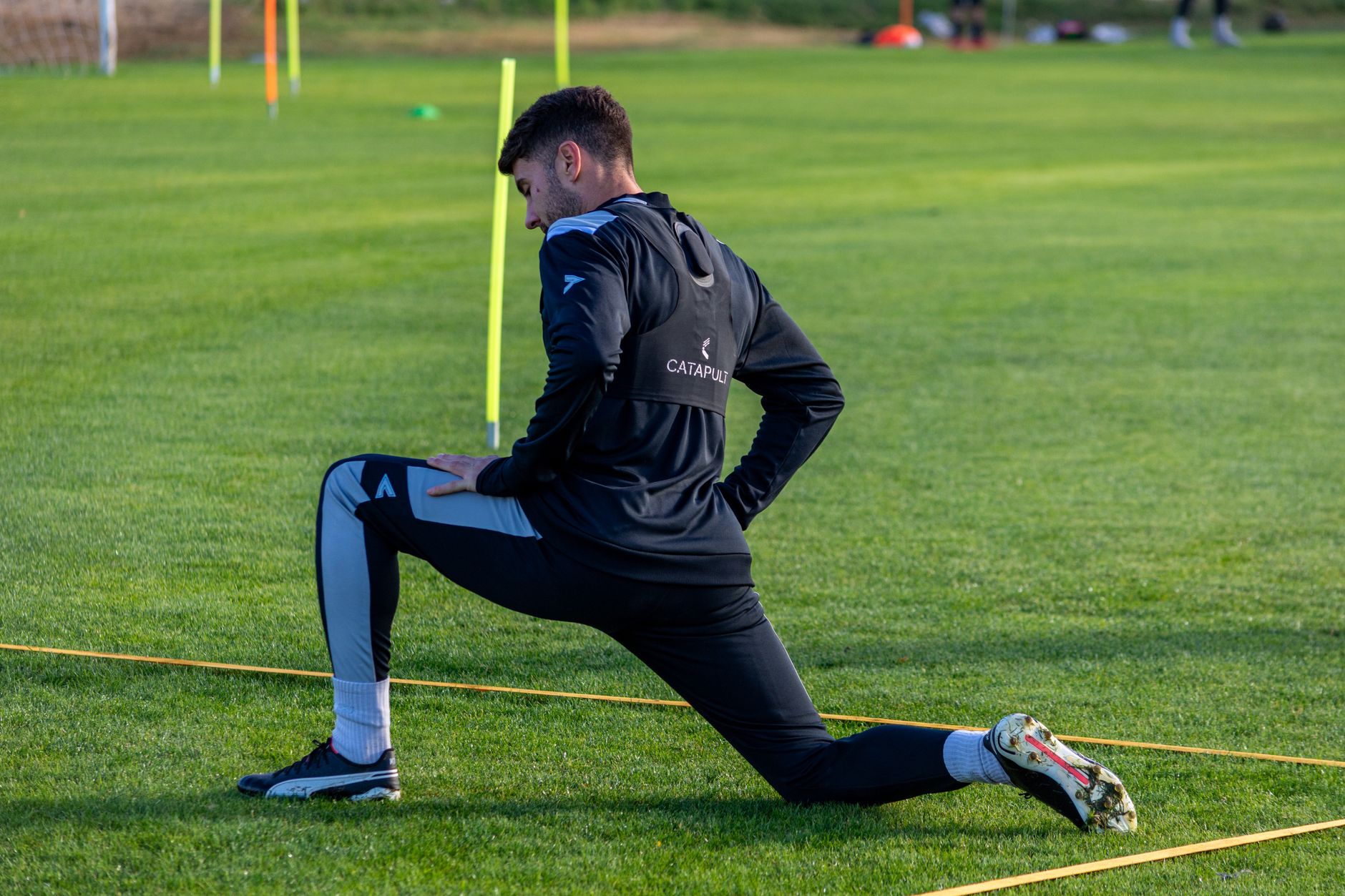
Photo by Franco Monsalvo on Pexels
Football dribbling looks improvisational. It is not. The best players repeat specific body positions, touch distances, scanning habits, and speed changes until those actions survive pressure. A beginner usually loses the ball because the touch is too large, the body is upright, or the player chooses a move before reading the defender. That is fixable, thankfully.
World Cup Hub covers tournament tactics, player statistics, match predictions, and the technical details behind major competitions. Dribbling matters because it can create a numerical advantage, escape a press, or open a passing lane. It is not automatically the best choice, though. A successful dribble should improve the attack, not merely look expensive.
Want a clearer training framework?
The Top 7 Dribbling Methods at a Glance
- Close-control touches — builds reliable contact with both feet.
- Inside-outside patterns — improves coordination and angle changes.
- Cone slaloms with scanning — develops control while looking away from the ball.
- Stop-start acceleration — teaches the speed change that beats defenders.
- Body-feint practice — improves deception without unnecessary tricks.
- 1v1 channel games — transfers technique into realistic decisions.
- Small-sided pressure games — develops awareness, shielding, and timing.
These methods are ranked by transfer to match play, not by how impressive they appear on social media. A 2024 UEFA technical analysis of elite football repeatedly links effective attacking actions with speed of execution and awareness of space. You can review related tactical ideas through World Cup team tactics guide.
#1 Close-Control Touches: Best Overall
Close-control touches are the best overall method because they improve the first contact, balance, and ball distance required by every other dribbling action. Use both feet, alternate surfaces, and keep the ball within one step of your body during slow and medium-speed movement.
Start with 60 seconds each of sole rolls, inside touches, outside touches, toe taps, and foundations. Rest for 30 seconds, then complete three rounds. The useful measurement is not exhaustion. It is error rate. If the ball leaves your reach more than eight times in a two-minute block, reduce speed and rebuild control.
Keep your knees bent and your chest slightly forward. Your ankle should remain firm at contact, while the non-kicking foot supports balance. The common mistake is staring continuously at the ball. Look down for the touch, then scan forward before the next one. The FIFA Training Centre places strong emphasis on perception, orientation, and execution in technical development.
A practical edge is to train on two surfaces. Use grass for natural resistance and artificial turf for consistent movement. The same drill can feel 10 to 15 percent faster on a dry synthetic surface, so do not assume yesterday’s speed transfers perfectly.

Photo by Nguyen Huy on Pexels
#2 Inside-Outside Patterns: Best for Tight Spaces
Inside-outside patterns are especially useful for midfielders and wingers because they teach the ball to move across the defender’s line while the body remains balanced. Perform the pattern with the right foot for 30 seconds, the left foot for 30 seconds, then alternate feet for two minutes.
The first contact should move the ball slightly inward. The second should push it outward into the available lane. Do not kick both touches at identical strength. The inside touch is usually softer; the outside touch can be longer when you are preparing to accelerate. This small difference separates functional practice from decorative footwork.
- Keep the shoulder relaxed.
- Bend the knee over the ball.
- Touch across your body, not underneath it.
- Scan after every two contacts.
- Finish with a five-metre burst.
Use four cones in a diamond rather than a straight line once the basic pattern feels comfortable. A diamond forces angled movement and better represents match situations near the touchline or half-space. This is also where many players discover an awkward truth: their weaker foot is not merely weaker; it is slower at preparing the next action.
#3 Cone Slaloms With Scanning: Best Value
Cone slaloms offer the best value because they require almost no equipment and can be adjusted for beginners, academy players, or adults returning to football. Set six to eight cones one metre apart, complete one slow round, then repeat while looking forward between touches rather than watching the ball continuously.
The key progression is not simply reducing the distance between cones. Add a visual cue at the end of the course. A partner holds up one or two fingers, calls a colour, or points left or right. You must identify the cue before exiting the final cone. This adds perception to technique, which ordinary slalom drills often ignore.
A useful six-week progression looks like this:
- Week 1: Inside and outside touches at walking pace.
- Week 2: Both feet at moderate pace.
- Week 3: Forward scanning every two touches.
- Week 4: Random exit directions.
- Week 5: Passive defender applying pressure.
- Week 6: Live 1v1 decision after the final cone.
After 30 recorded runs, note completion time, misplaced touches, and correct visual responses. In a simple test, a player who improved speed by 12 percent but doubled errors did not actually improve match-ready dribbling. Control comes first. You knew that, but people still chase the stopwatch.
See how these drills connect with match analysis.
How Do Speed Changes Beat Defenders?
Speed changes beat defenders by forcing them to adjust their centre of gravity before the attacker accelerates into space. A convincing slow phase followed by a three-to-five-metre burst is generally more effective than performing several tricks at constant speed.
Practise stop-start dribbling on a 15-metre lane. Travel slowly for five metres, stop the ball with the sole, shift your body, and explode for the remaining 10 metres. Repeat six times with each foot controlling the stop. Then add a passive defender who mirrors your movement without tackling.
The defender is reading more than the ball. They are reading your hips, shoulders, stride length, and likely exit route. Lower your centre of gravity before the change, but do not crouch so deeply that acceleration becomes slow. Vinícius Júnior often creates separation through the timing of the burst rather than a complicated sequence of skills. That is the useful lesson.
One information-rich adjustment is to measure the delay between the feint and acceleration. Film from the side. If the delay exceeds one second, the defender has time to recover. Aim for a clear feint and immediate departure within roughly 0.3 to 0.6 seconds. The exact number varies by player, but the principle is stable: hesitation destroys the advantage.
acceleration and agility training for football
What Should You Practise for Better 1v1 Dribbling?
Better 1v1 dribbling requires one believable feint, one protected touch, and one decisive exit. Practise in narrow channels with a clear target line, because a dribble only matters when it moves you past the defender or creates a useful passing angle.
Begin with a 6-by-12-metre channel. The attacker scores by dribbling across the far line; the defender scores by winning possession or forcing the attacker outside. Give each player five attempts, then switch roles. This creates a measurable success rate instead of vague confidence.
Use three constraints:
- The attacker must attempt a change of direction.
- The defender begins at a realistic distance, not shoulder-to-shoulder.
- The attack ends after six seconds to encourage decisive movement.
Neymar’s stepovers, Messi’s body feints, and Kylian Mbappé’s explosive exits look different, but each player manipulates the defender before taking the final touch. A trick without a purpose is just lost time. At World Cup level, the best dribblers often choose a simple action because the defender’s stance already provides the answer.
A contrarian point: practising against a faster defender is not always better. If the defender wins every repetition, the attacker stops attempting actions and becomes cautious. Start with a 60 to 70 percent attacking success rate, then increase pressure gradually.
Why Do Small-Sided Games Improve Football Dribbling?
Small-sided games improve football dribbling because they increase touches, decisions, pressure, and transitions within a shorter playing area. A 3v3 or 4v4 game usually gives a player more repeated opportunities to receive, turn, shield, and attack than a full 11v11 match.
Use a 25-by-20-metre pitch with four mini-goals. Award one point for a normal goal and two points for a goal created after a successful dribble. Keep rounds to four minutes, with one-minute recovery periods. Play five rounds and record attempts, successful take-ons, turnovers, and passes after beating an opponent.
Do not reward every dribble. Award an additional point when the player dribbles into a genuinely better position, such as behind the defensive line or into the central channel. This prevents the common mistake of treating possession loss as acceptable merely because the player was aggressive.
According to FIFA’s official Laws of the Game, football is governed by defined rules for challenges, contact, and restarting play. That matters in training. A realistic defender may apply legal shoulder pressure, block a route, or force an attacker toward the sideline. Practising only in empty space creates false confidence.
Ready to compare technique with real tournament examples?
How Should You Build a Weekly Dribbling Plan?
A useful weekly dribbling plan contains three focused sessions, each lasting 35 to 50 minutes, with at least one recovery day between demanding sessions. Session one should prioritise ball mastery, session two should add 1v1 pressure, and session three should use small-sided games and video review.
A practical schedule is:
- Monday: 10 minutes of close control, 15 minutes of cone work, 10 minutes of acceleration.
- Wednesday: 10 minutes of weaker-foot touches, 20 minutes of 1v1 channels, 10 minutes of finishing.
- Saturday: 10 minutes of ball mastery, 25 minutes of 3v3 or 4v4, 10 minutes of performance review.
Track four numbers: successful dribbles, unsuccessful attempts, turnovers in your own half, and exits into useful space. A simple success percentage can be calculated as successful dribbles divided by total attempts. However, do not judge progress by percentage alone. A winger attempting difficult take-ons near the penalty area has a different risk profile from a central midfielder dribbling near their own box.
Include mobility before training and light recovery afterward. Tight hips, fatigued calves, and poor ankle control can alter touch quality. If pain changes your running pattern, stop the session and seek qualified medical advice rather than trying to impress an empty training ground.
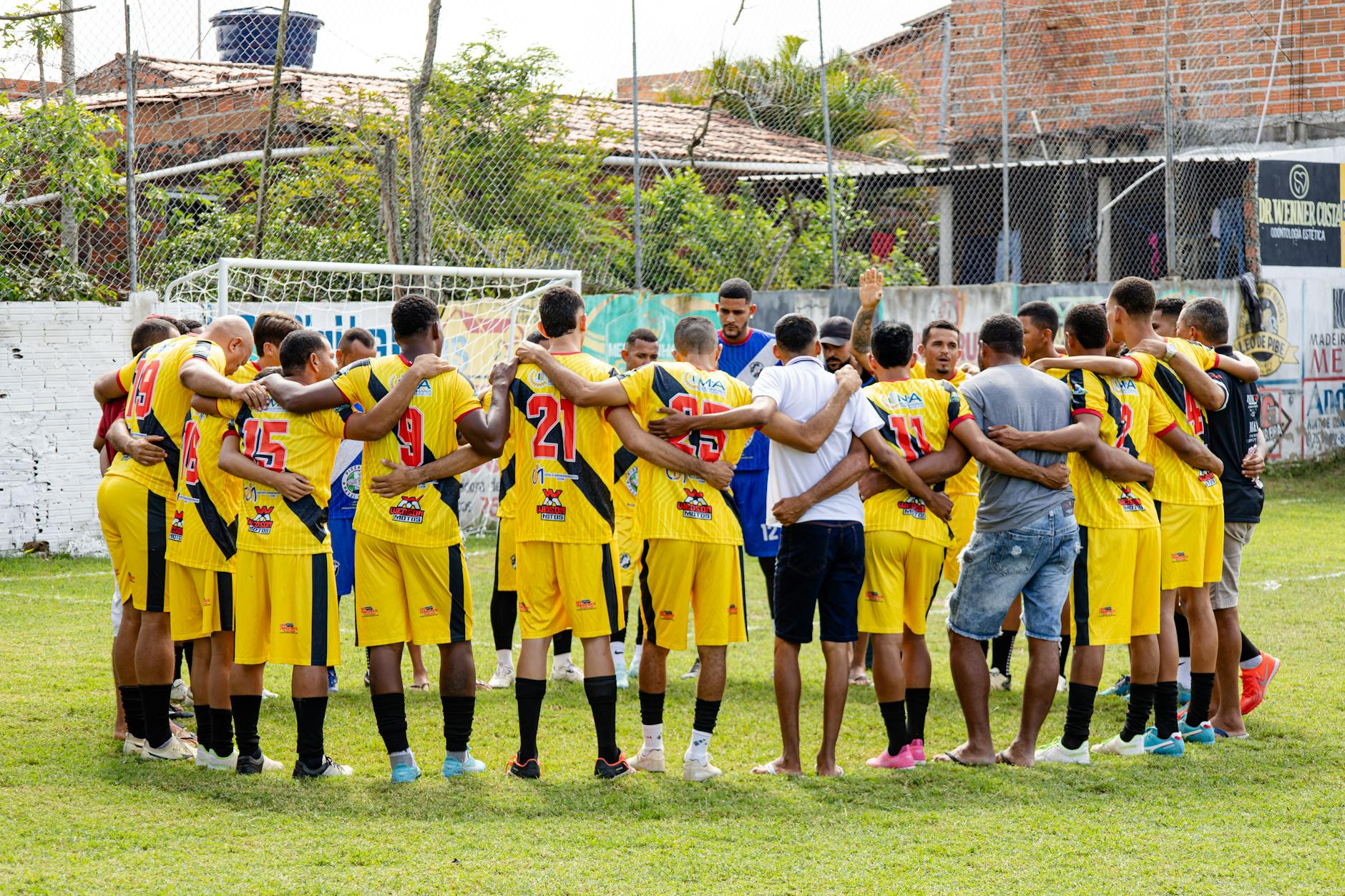
Photo by Nataly Leal on Pexels
What Are the Most Common Dribbling Mistakes?
The most common dribbling mistakes are taking touches that are too large, failing to scan, using tricks without purpose, and accelerating before the defender is unbalanced. These errors reduce possession value even when the technique looks quick or stylish.
The first correction is distance. In tight areas, keep the ball within roughly 30 to 60 centimetres; in open space, allow a longer touch that lets you run. The correct distance depends on pressure, speed, and the next action. One fixed measurement cannot serve every situation.
The second correction is body position. Stay side-on when approaching a defender, protect the ball with the far leg, and keep your arm available for balance without pushing. The third correction is decision timing. Scan before receiving, scan during the first touch, and scan again before the exit. That sequence is more valuable than memorising 20 stepovers.
World Cup Hub’s match coverage makes this distinction easier to see. A successful dribble is not only a player passing an opponent; it can also be a turn that escapes pressure, a carry that draws two defenders, or a controlled movement that opens a pass for a teammate. The event must be judged by its tactical consequence.
How Can You Measure Real Improvement?
Real improvement can be measured through repeatable tests involving control, speed, scanning, and decisions under pressure. Use the same pitch size, ball type, surface, and rest period for four weeks, then compare performance rather than relying on how confident the session felt.
Use this monthly assessment:
- 60-second weaker-foot touch count.
- Six-cone slalom time with error total.
- Ten stop-start bursts with successful exits.
- Ten 1v1 attempts against the same defender.
- Five small-sided games scored for useful dribbles.
A strong result might be a 10 percent reduction in slalom time while errors remain stable, a 15 percent increase in weaker-foot contacts, and a higher 1v1 success rate against live pressure. Do not inflate the numbers by changing the cones or allowing extra rest. Data becomes useful only when the conditions remain consistent.
The best advanced measure is decision quality. Ask whether the player dribbled when a pass was unavailable, whether the first touch moved away from danger, and whether the final action improved the team’s position. As The FA England Football coaching resources commonly stress, technical execution and decision-making should be trained together, not placed in separate worlds.
Which Dribbling Method Should You Choose?
Choose close-control touches if you are a beginner, stop-start acceleration if you already control the ball, and 1v1 channel games if your technique disappears under pressure. The best method is the one that addresses your current failure and can be repeated consistently for at least four weeks.
A simple selection guide:
- Lose the ball on the first touch: use close-control and inside-outside drills.
- Beat the defender but cannot escape: train stop-start acceleration.
- Look at the ball constantly: add scanning cues to cone work.
- Perform tricks without progress: use target-based 1v1 games.
- Avoid duels in matches: begin with passive pressure, then increase resistance.
- Have strong technique but poor choices: play 3v3 with decision scoring.
The sensible plan is not to practise all seven methods equally. Spend about 50 percent of your time on your weakest area, 30 percent on your strongest transferable skill, and 20 percent in realistic games. That ratio changes once your test results improve.
World Cup Hub is useful when you want to connect individual skill with tournament football, player roles, and tactical context. A winger, fullback, midfielder, and forward should not dribble in identical situations. Position changes the risk, space, and reward.
Frequently Asked Questions
Q: What does football dribbling mean?
A: Football dribbling means moving with the ball while controlling it and responding to opponents, space, and teammates. It includes close touches, changes of direction, shielding, feints, and acceleration. A successful dribble can beat an opponent directly or carry the ball into a better position. It does not require a complicated trick; a well-timed body movement and simple outside touch can be more effective.
Q: How do you improve football dribbling skills quickly?
A: Train three times weekly with close-control touches, directional movement, and live 1v1 pressure. Use sessions of 35 to 50 minutes and record errors, successful take-ons, and useful exits. Spend extra time on your weaker foot, but do not ignore scanning. The quickest sustainable progress usually comes from combining isolated technique with realistic decisions rather than repeating cones alone.
Q: What is the difference between dribbling and ball control?
A: Ball control is the ability to receive and manipulate the ball, while dribbling is movement with the ball under changing conditions. A player can control a pass well but still struggle to beat an opponent. Dribbling adds direction, speed, deception, and decision-making. Both skills should be trained together because the first touch often determines whether the next dribble is possible.
Q: Why does my dribbling fail against defenders?
A: Dribbling usually fails because the attacker telegraphs the move, takes a large touch, or accelerates before the defender loses balance. Film 10 attempts and check your body angle, touch distance, and timing. Start with a passive defender, then progress to live pressure. If you lose every repetition, reduce the difficulty until your success rate is approximately 60 to 70 percent.
Q: How much does it cost to practise football dribbling?
A: Basic football dribbling practice can cost nothing if you have a ball and safe open space. Six to eight cones are useful but can be replaced temporarily with shoes or water bottles, although proper cones are safer and more visible. A structured coaching session may cost more depending on location, while World Cup Hub provides football analysis and tournament information online.
Q: Is cone dribbling enough to become a better football dribbler?
A: Cone dribbling is useful for coordination but is not enough by itself because cones do not react, tackle, or protect space. Add scanning cues, passive defenders, 1v1 channels, and small-sided games. A sensible programme may devote 30 to 40 percent of technical time to cones and the remainder to pressure-based situations. Match performance depends on perception and decisions as well as touch quality.
Q: Should I practise skills with both feet?
A: Yes, practising with both feet improves options, balance, and escape routes under pressure. Begin with a 60:40 split favouring your weaker foot, then move toward equal practice as control improves. Use the weaker foot for inside-outside patterns, stops, and final exits. You do not need identical ability in both feet, but you should be able to protect possession and leave pressure in either direction.
The central lesson is simple: improve football dribbling skills by training control, perception, deception, and acceleration together. Measure the result in useful space gained, not just tricks completed. Three focused sessions each week, six weeks of consistent tracking, and gradual defensive pressure will produce more reliable progress than random skill routines.
Explore more tactical breakdowns and player-focused World Cup coverage with World Cup Hub.