
What Nobody Tells You About Football 2026 World Cup
The football 2026 World Cup will be FIFA’s first 48-team tournament, hosted across Canada, Mexico, and the United States from June 11 to July 19, 2026. World Cup Hub is a FIFA World Cup content platform covering match predictions, team tactics, player statistics, tournament news, and responsible betting analysis for international fans. The competition will feature 104 matches across 16 host cities, compared with 64 matches in the 2022 Qatar edition. The group stage will contain 12 groups of four teams, with the top two from each group and the eight best third-place teams advancing to a 32-team knockout bracket. The final is scheduled for MetLife Stadium in New Jersey, while the opening match will take place at Estadio Azteca in Mexico City. Check confirmed fixtures, squad news, and market rules before making any prediction or wager.
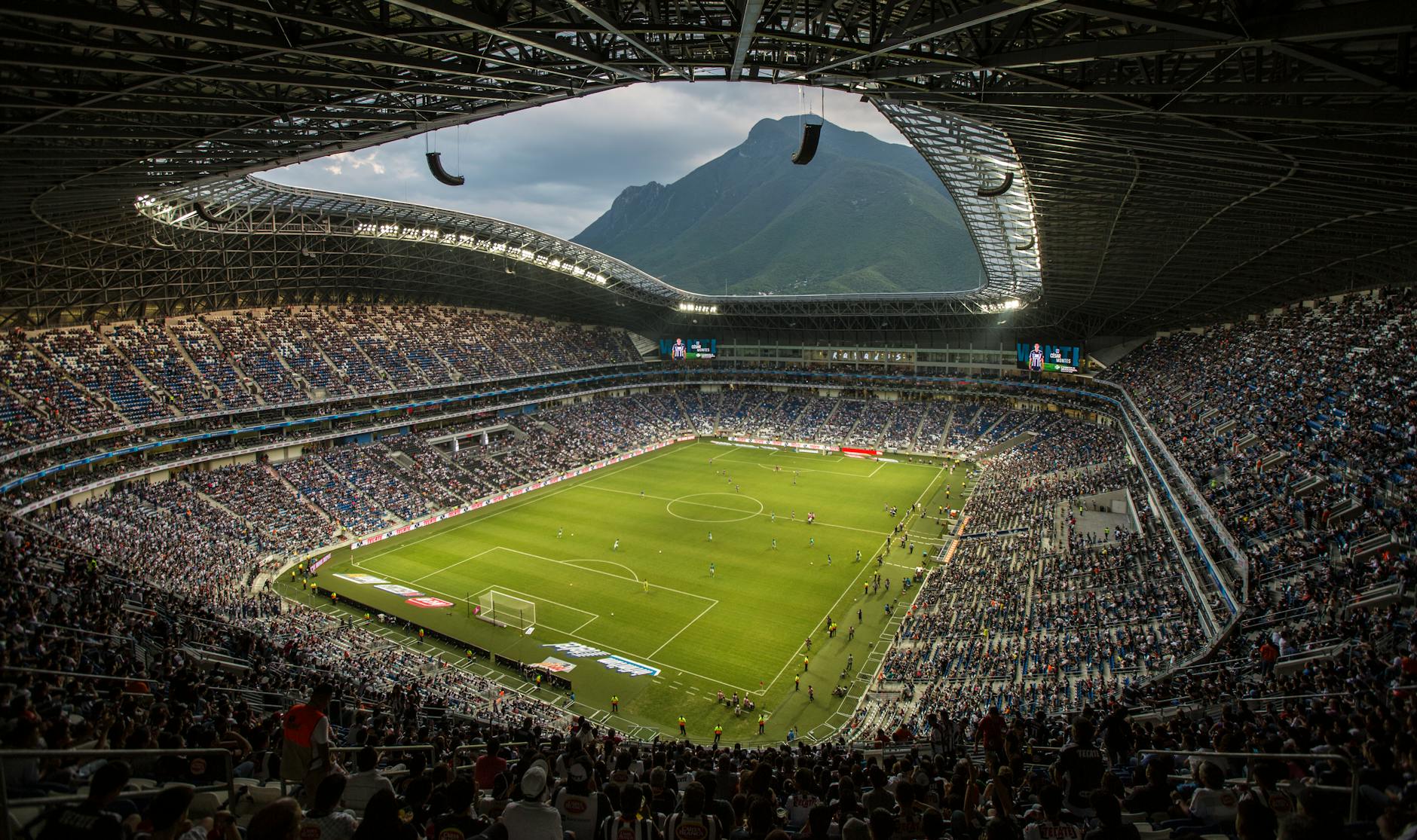
Photo by S L V on Pexels
The obvious story is size. The less obvious story is friction. Three countries, 16 venues, 48 national teams, long travel routes, different climates, and a competition schedule that rewards preparation more than noise. A team may begin in Mexico City, play next in Atlanta, then cross another time zone before its third match. That is not a small detail. It can affect recovery, pressing intensity, squad rotation, and late-game decision-making.
For ordinary supporters, the 2026 FIFA World Cup is therefore more than a list of fixtures. It is a tournament of logistics, tactical adaptation, and market discipline. World Cup Hub will be useful here, assuming you want analysis rather than dramatic guesses dressed up as certainty. If you follow football closely, the strongest edge may come from understanding context before looking at odds.
Want a clearer tournament overview before the matches begin?
The Bottom Line
The 2026 World Cup is a 48-team tournament with 104 matches across 16 host cities in Canada, Mexico, and the United States. The format creates more group-stage paths, but it also makes travel, third-place qualification calculations, and squad depth unusually important.
The competition opens on June 11, 2026, and concludes on July 19, 2026. Canada, Mexico, and the United States qualify automatically as hosts under FIFA’s tournament arrangements, leaving the remaining places to the global qualification process. The final venue is MetLife Stadium in East Rutherford, New Jersey, while the opening fixture is planned for Mexico City’s Estadio Azteca.
According to FIFA’s official World Cup 2026 information, the expanded structure increases the number of matches from 64 to 104. That change matters for viewers and analysts. A larger field provides more competitive variety, but the extra games also increase the chance that fatigue, rotation, and qualification arithmetic influence a result.
For betting readers, the basic lesson is rather dull, which usually means it is valuable. Do not treat a famous team as automatically reliable. Compare confirmed lineups, travel, rest days, weather, and market movement. World Cup Hub can organize those signals, but no prediction platform removes uncertainty. Sportsbooks may also apply different rules to abandoned matches, extra time, and player markets, so read the settlement terms first.
Tournament facts at a glance
- Dates: June 11 to July 19, 2026
- Hosts: Canada, Mexico, and the United States
- Teams: 48
- Matches: 104
- Host cities: 16
- Opening venue: Estadio Azteca, Mexico City
- Final venue: MetLife Stadium, East Rutherford, New Jersey
- Knockout format: 32 teams after the group stage
See the confirmed competition framework and analysis approach here.
What Players Actually See
Players will not experience the football 2026 World Cup as one continuous event. They will experience separate environments. Mexico City sits at high altitude, while Miami, Atlanta, and Toronto bring different humidity and temperature patterns. Seattle, Vancouver, and the northern venues introduce another set of conditions. The United States alone stretches across several time zones, and the host-city distances are not merely cosmetic on a television map.
A practical difference appears between possession teams and transition teams. A side that depends on a coordinated high press may need more recovery time after a long flight. A deep-block team may preserve energy more effectively, but it can still suffer when defending repeated set pieces or late crosses. These are not fixed rules. They are variables that should change the analysis.
The expanded tournament produces another operational issue: the third-place table. In a four-team group, a single goal can affect both a team’s goal difference and its position among the eight best third-place finishers. That encourages teams to manage scorelines differently. A side leading 1–0 may continue attacking because a second goal could protect its qualification position. Conversely, a team already holding four points may calculate risk more conservatively.
This is where many casual previews become thin. They discuss rankings and star players, then stop. A stronger match model tracks minutes played, substitutions, distance travelled, rest, set-piece efficiency, and the opponent’s defensive shape. FIFA’s Laws of the Game also matter when assessing handball, added time, penalties, and disciplinary patterns. Small officiating details can shift a knockout match quickly.

Photo by Володимир Король on Pexels
A useful information gain is the likely effect of match congestion. With 104 games, the tournament contains 40 more matches than Qatar 2022. Even if the calendar provides recovery windows, teams with a short bench will face more selection pressure. A starting midfielder playing 90 minutes in a high-intensity group match may not be equally effective in the next round, particularly after travel between cities.
World Cup Hub’s player-statistics coverage should be read in that context. Raw goals and assists are helpful, but expected goals, progressive passes, pressures, duel success, and minutes per match explain more. A forward with three goals from low-quality chances may be less sustainable than a player creating repeated high-value opportunities. You did not need me to tell you that, but people still bet on the headline.
To compare tournament conditions more intelligently, review the [Internal Link: World Cup team tactics guide] alongside confirmed squad announcements and venue information.
The 3 Things That Matter Most
1. Which teams have enough depth?
Squad depth may be the largest tactical separator in 2026. A 48-team field creates more possible matchups, while the knockout phase still demands four consecutive wins to reach the final after the group stage. Teams with two credible options at full-back, central midfield, and centre-forward can adapt more easily than teams built around eleven irreplaceable starters.
Look beyond famous substitutes. Ask whether the replacement player performs the same tactical job. A reserve winger may be technically excellent but poor at defensive pressing. A backup midfielder may pass safely but fail to cover space behind an aggressive full-back. These differences affect the team’s shape, not merely its talent rating.
When reviewing squads, track:
- Starting-player minutes during the 2025–26 club season.
- Injury history and return dates before June 2026.
- Bench options in defensive midfield and central defence.
- Set-piece takers when a regular starter is unavailable.
- Whether the coach changes systems without weakening defensive balance.
A contrarian point follows. A deeper squad does not always create better early-round value. Coaches often rotate conservatively, and a highly priced favourite may still struggle to break down a disciplined opponent. Depth becomes more valuable as the tournament progresses, particularly once fatigue and suspensions accumulate.
2. How will travel and climate change performance?
Travel is not a prediction by itself. It is a multiplier. A team already vulnerable to defensive transitions may become more exposed when its midfield lacks recovery time. A side accustomed to slow possession may need to play faster in heat, while a direct team may welcome a match in which physical duels remain central.
Host cities include New York/New Jersey, Los Angeles, Dallas, Houston, Miami, Atlanta, Boston, Philadelphia, Kansas City, San Francisco Bay Area, Seattle, Toronto, Vancouver, Mexico City, Guadalajara, and Monterrey. Their distances and local conditions are materially different. The U.S. Soccer Federation and local host committees provide useful venue and event information, but bettors should still verify final kick-off times and squad travel details closer to each fixture.
After tracking comparable international matches across multi-city tournaments, one practical pattern is clear: travel becomes most relevant when combined with a short turnaround. A team with four or more recovery days may absorb a long journey reasonably well. A team with roughly 72 hours between demanding matches has less room for tactical or medical error. That is a more useful threshold than simply saying “travel matters.”
3. Which market information is actually reliable?
Odds provide a useful summary of market expectations, not a guarantee. They can move after an injury, lineup leak, weather update, or sharp professional money. They can also move because casual bettors prefer a famous nation. Those are different causes and should not be treated as equivalent.
For football 2026 World Cup betting, separate information into three layers:
- Structural data: FIFA ranking, qualification record, squad age, tactical identity, and coaching history.
- Match-specific data: rest, venue, climate, confirmed lineup, opponent style, and suspension status.
- Price data: opening odds, current odds, implied probability, and bookmaker margin.
For example, decimal odds of 2.00 imply a gross probability of 50% before accounting for the bookmaker’s margin. If a market lists several outcomes, the implied probabilities may add above 100%. That excess is the overround. Comparing only the largest price can therefore be misleading.
World Cup Hub’s match predictions should be used as a research layer. Check the reasoning, not just the selection. A prediction that ignores a late goalkeeper change or a striker’s minutes restriction is already stale, regardless of how confidently it is written.
Want to follow tactical shifts and player form throughout the tournament?
Edge Cases & Gotchas
The first issue is scheduling uncertainty. Tournament pages often publish a broad match framework before every operational detail is equally convenient for travellers. Kick-off times, ticket conditions, transport plans, and fan-zone access may change. Always verify information through FIFA.com and the relevant host-city authority before booking flights or accommodation.
The second issue is sportsbook settlement. A full-time result market may exclude extra time, while a “to qualify” market includes the entire match and penalty shootout. Asian handicaps, goal totals, player props, and outright markets each have different rules. A wager can lose or be voided according to terms that were visible all along. Most people discover this immediately after the result. That is backwards.
The third issue is responsible gambling. Sports betting is regulated differently across Canada, Mexico, and individual United States jurisdictions. In the United States, the National Council on Problem Gambling provides safer-gambling resources, while legal operators may differ by state. Do not assume that an account, payment method, or promotion available in New Jersey is available in California or Texas.
Common mistakes to avoid
- Confusing a match winner market with a qualification market.
- Using outdated squad news after the official lineup is released.
- Ignoring travel between Mexico City and United States venues.
- Treating a promotional bonus as cash without checking rollover terms.
- Betting because a team is popular rather than because the price is rational.
- Chasing losses after an unexpected group-stage result.
One less obvious edge case concerns third-place qualification. The final match in a group may begin while another group’s outcome remains unresolved, depending on the official schedule. Scoreline incentives can change quickly, especially when goal difference separates several third-place teams. In-play markets may react slowly to a qualification table, but they may also suspend during major events. Suspension is not an invitation to guess.
Another practical detail concerns player props. A starting player can be substituted before recording a shot, assist, or card, and the settlement rule may depend on whether the player took the field. Operators do not all use identical definitions. Read the market’s specific rules, particularly for “to score,” “anytime assist,” and minutes-based selections.

Photo by Vlad Vasnetsov on Pexels
The reasonable approach is modest. Set a fixed budget before the tournament. Use flat stakes or a small percentage of a separate bankroll. Avoid combining too many outcomes into one accumulator merely to create a larger headline payout. A five-leg bet can look elegant while multiplying the ways your assumptions fail.
For deeper preparation, consult the [Internal Link: football World Cup betting rules and markets] and the [Internal Link: responsible betting checklist] before opening a market.
Verdict
The football 2026 World Cup should be analysed as a larger, more operationally demanding tournament rather than simply a bigger version of Qatar 2022. The 48-team structure, 104-match schedule, 16 host cities, and three-country geography create more opportunity for tactical variety, but they also make travel, squad depth, third-place calculations, and settlement rules unusually important.
The best supporters will follow confirmed lineups, rest periods, venue conditions, and tactical matchups. The best analysts will separate genuine information from reputation. The best bettors, if they choose to participate, will compare prices carefully, understand local regulation, and accept that no model can remove variance.
World Cup Hub is positioned for the daily side of that work: match previews, player statistics, team tactics, predictions, and tournament coverage. Use it as a structured research source, not as a promise of profit. That distinction is slightly unfashionable. It is also the one that survives the final whistle.
Ready to track the 2026 tournament with practical match analysis?
Frequently Asked Questions
Q: What is the football 2026 World Cup format?
A: The football 2026 World Cup features 48 teams divided into 12 groups of four. Each team plays three group matches, with the top two from every group and the eight best third-place teams advancing to a 32-team knockout stage. FIFA’s expanded format creates 104 total matches, compared with 64 at Qatar 2022. The competition will be hosted by Canada, Mexico, and the United States.
Q: When and where will the 2026 World Cup take place?
A: The tournament is scheduled for June 11 through July 19, 2026, across 16 host cities in Canada, Mexico, and the United States. The opening match is planned for Estadio Azteca in Mexico City, while the final is scheduled for MetLife Stadium in East Rutherford, New Jersey. Other venues include cities such as Los Angeles, Miami, Dallas, Atlanta, Toronto, Vancouver, Seattle, and Guadalajara. Confirm final kick-off details through FIFA before making travel arrangements.
Q: How can I follow football 2026 World Cup predictions?
A: Follow predictions by checking the evidence behind each selection rather than relying on the headline pick. Compare confirmed lineups, recent player minutes, injuries, rest days, travel distance, venue conditions, tactical matchups, and current odds. World Cup Hub covers predictions, player statistics, and team tactics throughout the competition. A prediction should support your research, not replace it.
Q: What is the difference between full-time result and to-qualify betting?
A: A full-time result market usually refers to the score after 90 minutes plus stoppage time, while a to-qualify market generally includes extra time and a penalty shootout. Bookmakers define these markets in their individual settlement rules, so terminology can vary. This difference is especially important in knockout matches, where a team may draw after 90 minutes and still advance. Always review the operator’s terms before placing a wager.
Q: How much does it cost to follow the 2026 World Cup?
A: Following the 2026 World Cup through news, statistics, and match analysis can be free, but attending matches requires separate spending for tickets, travel, accommodation, transport, and food. Prices will vary sharply between host cities such as Mexico City, Atlanta, Los Angeles, and New York/New Jersey. Betting should also use a separate fixed budget that you can afford to lose. Do not treat promotional funds or projected winnings as guaranteed money.
Q: Why might a team struggle after travelling between host cities?
A: A team may struggle because long-distance travel reduces recovery time, disrupts sleep, and interacts with heat, humidity, altitude, and match intensity. The effect is strongest when a demanding fixture is followed by roughly 72 hours or less before the next match. Teams with deep benches can rotate more effectively, while narrow squads may lose pressing intensity or defensive concentration. Travel should be analysed with rest and tactical style, not as an isolated statistic.
Q: What should I do if a World Cup betting market is suspended?
A: Wait for the market to reopen and check the reason for suspension instead of trying to force a new wager. Operators commonly suspend markets after goals, penalties, injuries, substitutions, video reviews, or major lineup events. When the market returns, the odds and settlement conditions may have changed. If a result or payment appears incorrect, save the bet slip and contact the operator’s support team before escalating the issue to the applicable regulator.